
← Our Services / Fire Detection & Alarm Systems
Fire Alarms
Design, installation, commissioning and maintenance of fire detection and alarm systems, specified to the layout and use of your building. Based in Stockport, covering Greater Manchester, Cheshire and the Peak District, with sites across the UK.
Systems specified around the layout and use of the building — from conventional single-panel systems to multi-zone, fully addressable installations. Alongside detection, we support wider fire safety needs: upgrades, fault-finding on existing systems, and ongoing maintenance so things work when they're needed.
We're based in Stockport and carry out the majority of our fire alarm installation and maintenance work across Greater Manchester, Cheshire and the Peak District, with site visits further afield across the UK where the job needs it.
Every installation is designed to BS 5839‑1, the code of practice for the design, installation, commissioning and maintenance of fire detection and fire alarm systems in non-domestic premises. The current edition came into effect in April 2025 and replaced BS 5839‑1:2017. Documentation — zone plans, schematics and as-wired drawings — is included as standard.
For sites that need a signal to reach someone off‑site, we also arrange ARC monitoring, covering fault and fire signal routing to an Alarm Receiving Centre. See that page for what it means for automatic Fire & Rescue Service attendance.
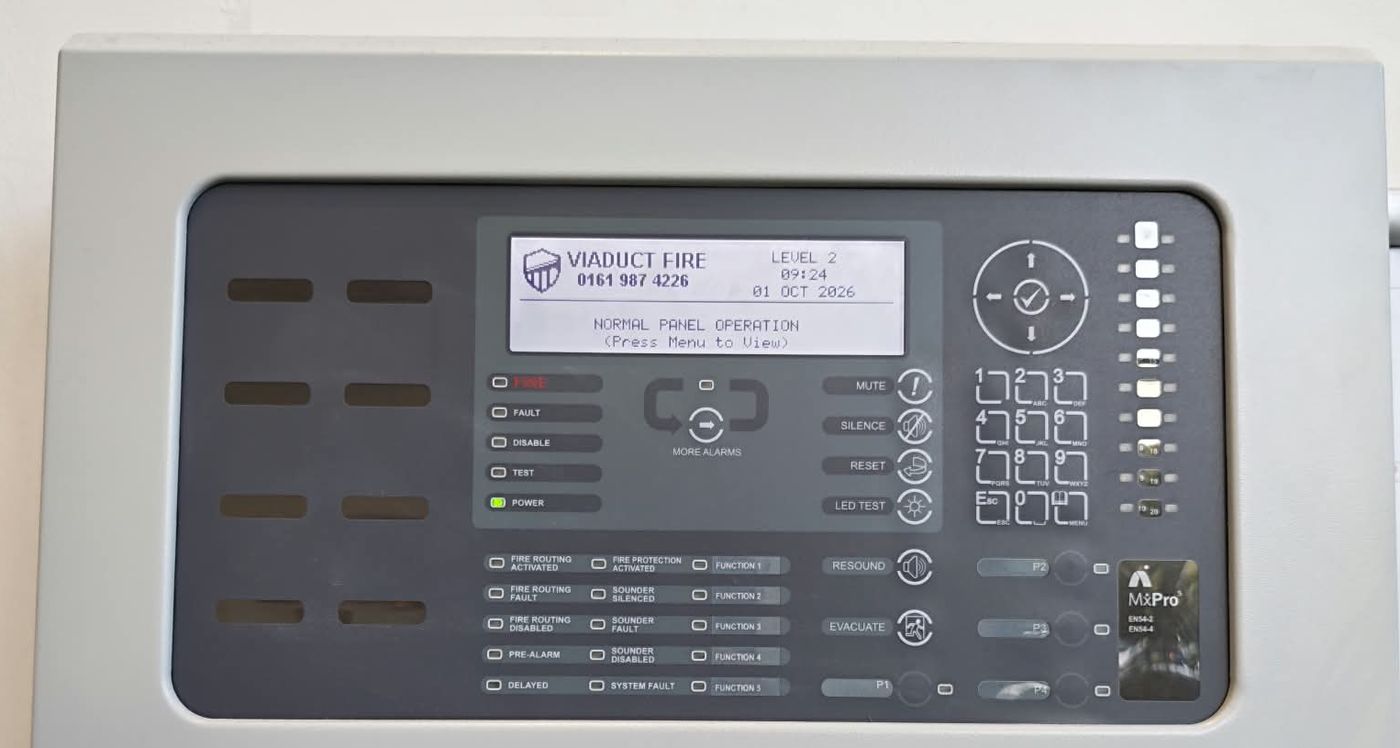
Fig. 01 — Addressable loop schematic (illustrative). D: detector, CP: manual call point, S: short-circuit isolator.
Technical Specification
System categories.
BS 5839‑1 defines a system's coverage by category — which areas get automatic detection, and why. We'll recommend the right one for your building's layout, use and risk; here's what each actually covers.
| Category | Coverage |
|---|---|
| M | Manual system — call points and sounders only, with no automatic fire detectors. Typical of common workplaces such as offices, shops, factories and warehouses, and often combined with P1 or P2 where an insurer requires automatic detection. |
| L1 | Life protection. Automatic detection throughout all areas of the building, to give the earliest possible warning and the longest time to escape. Typical of hospitals and residential care premises, and of larger or more complex buildings. |
| L2 | Life protection. The L3 areas, plus rooms in which people sleep and specified areas of high fire hazard or high fire risk. Typical of hotels, hostels, student accommodation and HMOs, which are usually designed to L1 or L2. |
| L3 | Life protection. Automatic detection in escape routes and in the rooms that open onto them, so occupants are warned before the route becomes impassable. Typical of phased evacuation buildings and healthcare premises without sleeping accommodation. |
| L4 | Life protection. Detection within the circulation areas of escape routes, such as corridors and stairways, to warn of smoke in the route. Used, for example, where a fire could spread from an unoccupied area into an escape route, or in a school that is only partly occupied at certain times. |
| L5 | Life protection. A system designed to meet a specific fire safety objective that L1–L4 don’t cover, often a localised need in part of a building, such as detection that operates magnetic door holders or protects an inner room. |
| P1 | Property protection. Automatic detection throughout the building, to minimise the time between ignition and the arrival of firefighters. Except in continuously occupied premises, BS 5839‑1 recommends automatic transmission of fire alarm signals to an Alarm Receiving Centre (clause 14.8). |
| P2 | Property protection. Automatic detection in defined parts of the building only, where the fire hazard or the risk to property and business continuity is high, such as a server room or a commercial kitchen. |
Full reference detail: BS 5839‑1 Category Table.
System Types
Conventional and addressable.
The two ways a wired fire alarm system connects its detectors and call points back to the control panel.
Conventional
Detectors and manual call points are wired in zones. Each zone is a circuit of cable that runs back to the control panel and ends in an end‑of‑line device, which lets the panel monitor the circuit for open and short circuit faults. The panel sees each zone as a whole, so when a device operates it shows which zone is in alarm, but not which device on that zone.
Zones follow the layout of the building. Under BS 5839‑1:2025, a zone containing non‑addressable automatic detectors should not exceed 2,000 m² of floor area or a search distance of 60 m, and in a building of more than 300 m² each zone should be limited to a single storey (clauses 12.1 and 12.3). Conventional systems are most often found in smaller buildings with a straightforward layout.
Addressable
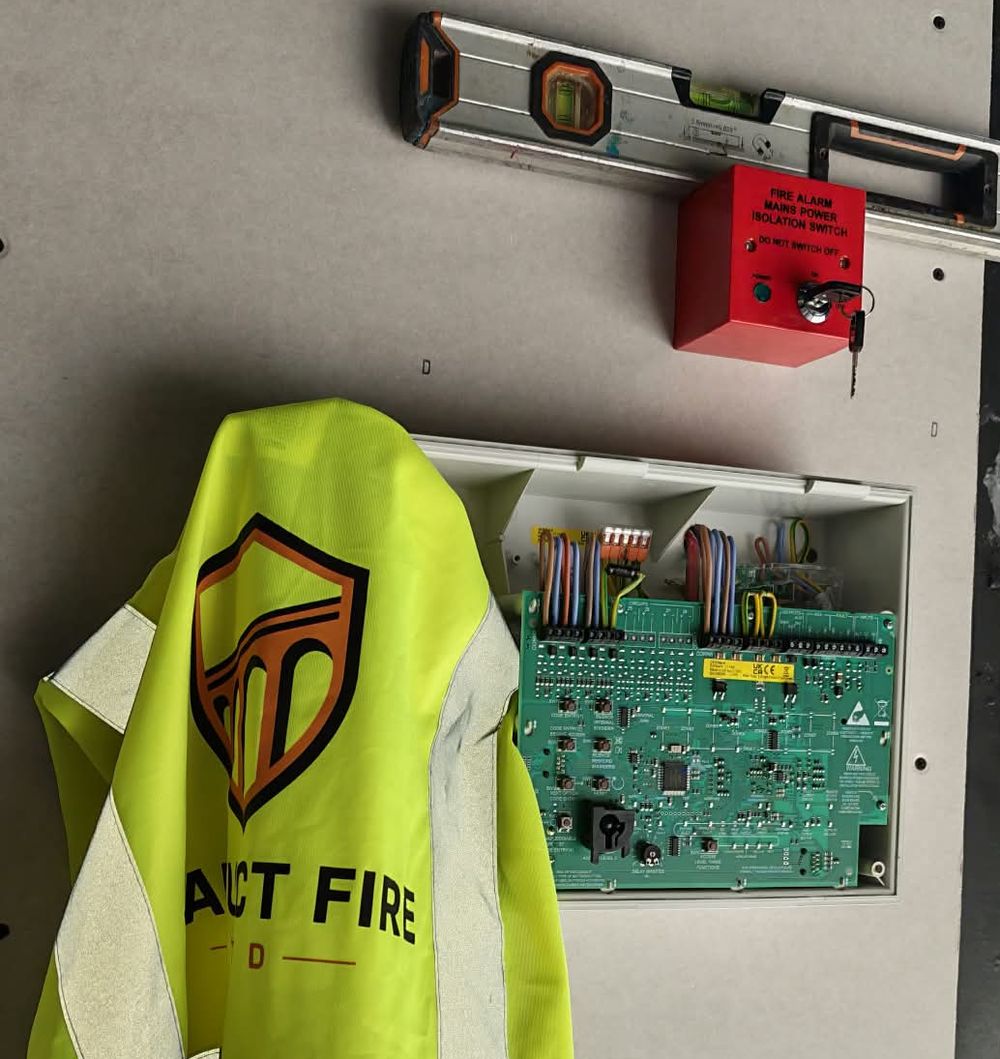
Devices are connected on a loop: a cable that leaves the panel, passes through each device in turn and returns to the panel. Every device has its own address, so the panel identifies the exact detector or call point that has operated, can show its location as text such as a room name or number, and monitors the condition of each device individually. A break in the loop still leaves every device fed from at least one end, and short‑circuit isolators limit the effect of a short circuit to a small section. Clause 11.2.2 asks that a single fault doesn’t disable protection across more than 2,000 m² or more than one floor.
Zones are still used. Zone indication has to be given at the panel even where address text is available (clause 12.4), because it often gives a quicker, if less specific, indication of where a fire is. Loop length and the number of devices on a loop are set by the manufacturer, which is why system size and device choice are part of the design from the start. Our volt drop calculator covers the cable side of that.
Both are wired systems, so power and signalling run through cable. On the critical signal paths BS 5839‑1 (clause 25.2) requires fire‑resisting cable types, and the devices are powered from the panel’s power supply and standby batteries, so the batteries to maintain sit in one place.
Wireless Equipment
Radio‑linked systems.
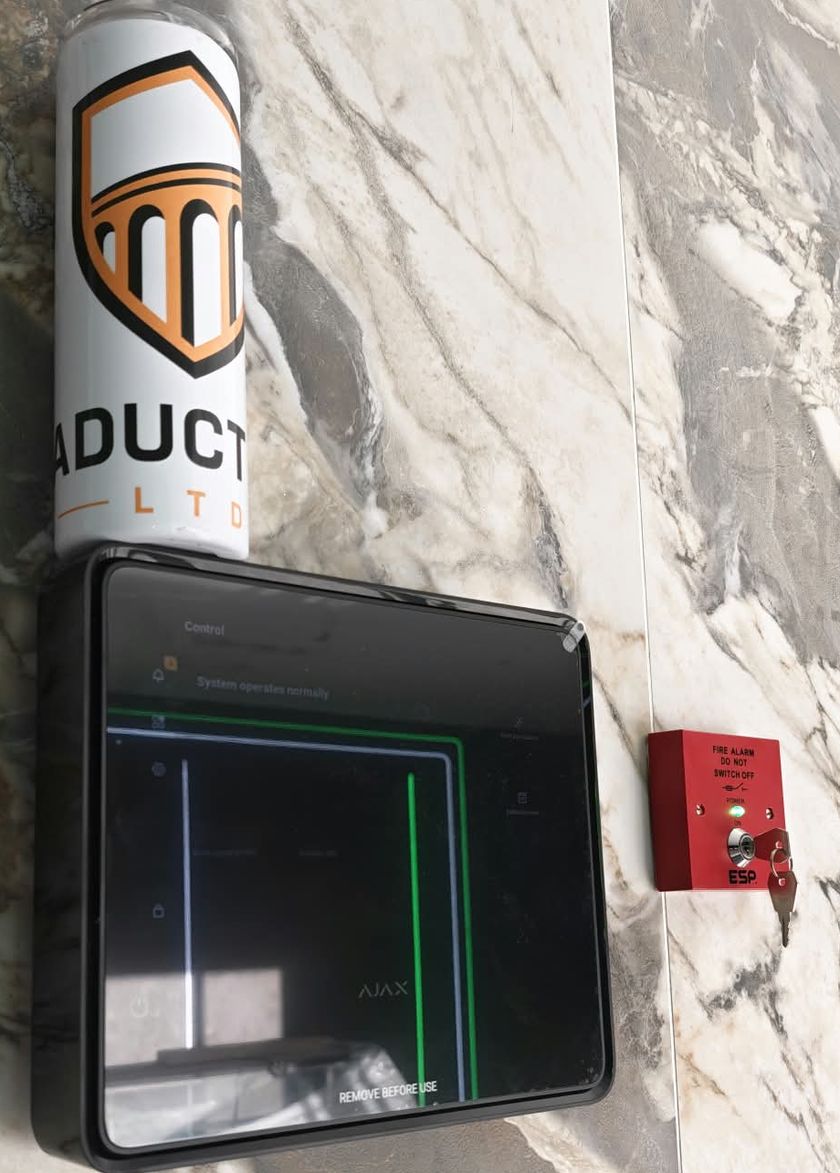
In a radio‑linked system, the detectors, manual call points and sounders communicate with the control equipment by radio instead of over cable, and each device is powered by its own battery, so there is nothing to run between devices. Radio can also link a small number of devices into an otherwise wired system, and it is sometimes used for temporary installations during construction or refurbishment. BS 5839‑1:2025 covers all of this in clause 26, and its recommendations apply on top of the rest of the standard.
Certified components
Components of a radio‑linked system should conform to BS EN 54‑25, the European standard for components using radio links.
Two power sources
Every radio device should be supplied from at least two independent sources, such as a primary battery plus a second battery. A fault should be given at the panel when a supply can keep the device running for no more than 30 days, and for alarm devices, 30 minutes in the alarm condition.
Radio survey first
Installation should only follow a comprehensive radio survey, checking that no other source of radio transmission could interfere with or block the system and that there is adequate signal strength in both directions in every area where a device will be. Signal strengths and background noise are recorded (26.9).
Records at handover
At commissioning, the system code, channel or frequency and the signal level at each device are recorded, shown to be within the manufacturer’s specification, and a copy kept on site. Radio links between panels are checked every 12 months.
The commentary to the clause is even‑handed: it says the advantages and disadvantages of hardwired and radio‑linked systems are different, and that neither is suitable for every site. It also notes that testing and evacuation drills beyond the manufacturer’s recommendations can shorten the life of radio‑linked sounder batteries, and that automatic silencing of radio sounders is sometimes used to reduce the drain, provided it meets the recommendations in clause 15.1.9.
The equipment has moved on too. Ajax, for example, now offers a commercial fire system certified to EN 54 parts that include EN 54‑2 (control equipment), EN 54‑4 (power supplies) and EN 54‑25 (radio links), which puts it in the same certification framework as wired commercial systems.
Viaduct Fire’s Notes
Wireless is our second choice.
Our view, from the engineer’s side of the job.
Radio‑linked systems have a place and we install them, but we treat them as the second choice: the answer when cable can’t practically go where it needs to, rather than the starting point. The technology keeps improving, and EN 54‑certified systems such as Ajax’s are a real step forward, but two problems come with any radio system however good it is, the radio link and the batteries. BS 5839‑1 treats both technologies as legitimate, so this is our view as installers rather than a requirement of the standard.
Interference. Radio shares the air with everything else. A survey tells you what the conditions are on the day it is carried out, and the standard requires the background noise to be recorded for that reason, but it can’t tell you what will be installed next door next year, or what a refit, new partitions, metal racking or foil‑backed insulation will do to the signal path. A better radio protocol makes interference less likely, but it doesn’t remove the possibility, and a wired circuit isn’t exposed to this particular risk.
Batteries. Every wireless device carries its own battery, and every battery eventually has to be changed. Battery life depends on how the device is used, how often it is tested and how many evacuation drills it goes through. The standard calls for a fault at the panel once a battery has 30 days or less left, so replacement becomes a scheduled job for the life of the system, repeated for every device. On a wired system the devices draw from the panel’s power supply and standby batteries, which sit in one place.
Accessibility. That is why accessibility has to be part of the decision before anything is installed. Every battery change means reaching the device: detectors at height or in ceiling voids, devices in locked plant rooms or tenant areas, bedrooms in hotels, care homes and student accommodation where someone has to be let in each time. Working at height needs access equipment as well. The cost and disruption of getting to every device, repeatedly, can outweigh the saving from not running cable, so we ask who will change the batteries, how they will reach each device and who is responsible, before we recommend wireless.
Where wireless is the right answer, such as listed and heritage buildings where cable can’t be fixed, temporary installations during construction, or extensions where cabling would mean major disruption, we design it to clause 26: radio survey first, records kept, and devices placed where they can be reached. Viaduct Fire takes a holistic approach, looking at the whole building and the whole life of the system and not just the day of installation. If you are weighing up wired against wireless, get in touch and we will talk it through.
What's Included
Scope of work.
- Design & system specification for the building's actual layout and use
- Single-panel and multi-zone/addressable installations
- Fault-finding, upgrades and repairs on existing systems
- Planned maintenance, with six-monthly inspection and servicing visits to BS 5839-1
- Zone plans, schematics & as-wired drawings for every job
- 24/7 emergency call-out for urgent faults
Common Questions
Fire alarm FAQs.
-
What areas do you cover for fire alarm installation and maintenance?
We're based in Stockport and carry out most of our fire alarm work across Greater Manchester, Cheshire and the Peak District, with site visits further afield across the UK where needed.
-
How often does a fire alarm system need to be tested and serviced?
BS 5839‑1 recommends a weekly test by the user, using a different manual call point each week so that all of them are tested in rotation, with the manufacturer’s recommendations followed. It also recommends inspection and servicing visits by a competent person at intervals of approximately six months, and a visit any time from five to seven months after the previous one is acceptable. We’ll set up a maintenance schedule matched to your system and how the building is used.
-
Is Viaduct Fire Ltd BAFE registered?
We're not currently BAFE (British Approvals for Fire Equipment) registered. BAFE SP203‑1 is a third-party certification scheme for fire detection and alarm companies, and it's something some customers — particularly on larger or higher-risk sites — look for. Every system we design, install and maintain is carried out to BS 5839‑1 by qualified engineers, with full documentation (zone plans, schematics, as-wired drawings and test certificates) provided as standard on every job. If third-party BAFE certification is a requirement for your site or insurer, let us know when you get in touch and we'll talk through what that means for the job.
-
What’s the difference between a conventional and an addressable fire alarm system?
A conventional system wires detectors and call points in zones back to the panel, so the panel shows which zone has activated but not which device. An addressable system gives every device its own address on a loop, so the panel can identify exactly which one has activated. Conventional suits smaller, simpler buildings, and addressable is the usual choice for larger or more complex sites. Either can be split into several zones, and we’ll recommend whichever fits your building’s layout and use.
-
Can a fire alarm system be wireless?
Yes. BS 5839‑1:2025 has a clause for radio‑linked systems (clause 26), and the components should conform to BS EN 54‑25. A radio system needs a radio survey before installation, two independent power sources for every device, a fault warning at the panel when a battery has 30 days or less left, and battery changes for the life of the system. We treat wireless as a second choice to a wired system, for sites where cable can’t practically be installed, and we’ll talk through which suits your building.
-
Can you take over maintenance of a fire alarm system someone else installed?
Yes — we regularly take over maintenance contracts for existing systems, whatever the original installer. We'll survey the system, flag anything that needs attention, and bring documentation up to date if it's missing before starting a regular service schedule.
-
Do you provide documentation and certificates for fire alarm work?
Yes — zone plans, system schematics, as-wired drawings and test/commissioning certificates are included as standard on every job. Certificates are also available through our digital logbook portal, so you've got online access to your records whenever you need them.
Other Specialisms
The rest of the picture.
Fire and security systems rarely stop at one discipline — here's everything else we cover.

Fire Extinguishers
Supply, siting and annual servicing of portable fire extinguishers, matched to the fire risks present in your building.
Fire Extinguishers →
Emergency Lighting
Emergency lighting that works when the power doesn't — designed, installed and tested to BS 5266‑1, so escape routes stay lit and exits stay visible.
Emergency Lighting →
CCTV
Camera systems specified to suit the site, with remote viewing options — from a single entrance camera to a fully networked, monitored setup.
CCTV →
Intruder Alarms
Detection and alarm systems protecting premises against unauthorised access — from single-zone setups for smaller units to multi-zone systems across larger sites.
Intruder Alarms →
Drawing Design
Zone plans, system schematics and as-wired drawings for new and existing systems — available as a standalone service for systems that need documentation brought up to date.
Drawing Design →
Access Control
Card, fob and keypad access control systems, specified to release safely on activation of your fire detection system.
Access Control →
Sprinkler Monitoring
Electrical monitoring of wet and dry sprinkler installations — flow, valve position, tank level and pump status brought back to a dedicated monitoring panel, with the signals passed on to your fire alarm system and, where required, to an ARC.
Sprinkler Monitoring →
ARC Monitoring
Signalling from fire and intruder alarms to an accredited Alarm Receiving Centre, with police URN application support for intruder alarms.
ARC Monitoring →Need fire alarms?
Tell us about the site and what you need — we'll get back to you with a straight answer.